

The Enigmatic Mystery of the Sabu Disk: Ancient Egypt’s Most Puzzling Artifact
The Sabu Disk, unearthed from the sands of ancient Egypt, continues to baffle historians, archaeologists, and engineers alike. This enigmatic stone artifact—discovered in the tomb of Prince Sabu at Saqqara—has ignited debates and fascination for decades. With its peculiar tri-lobed shape and intricate design, the Sabu Disk doesn’t fit neatly into the known technological or ceremonial artifacts of its era. Estimated to date back to the First Dynasty (around 3100 BCE), the disk pushes the boundaries of what we believe early Egyptians were capable of creating. It’s not just an archaeological curiosity—it’s a symbol of the lost genius and ingenuity of ancient civilization. The artifact’s complex structure suggests a level of understanding of aerodynamics or mechanical function far ahead of its time.
Modern researchers have proposed countless theories about the Sabu Disk’s purpose—from a ceremonial object to a part of ancient machinery, or even a representation of divine symbolism. Its construction material, schist, is notoriously brittle, making its perfectly shaped design even more mysterious. How could early craftsmen carve such precise curves from a fragile stone without shattering it? The Sabu Disk challenges our perception of early Egyptian technology and continues to intrigue visitors to The Egyptian Museum, where replicas and studies of the artifact are often discussed. This artifact invites us to look beyond the grandeur of pyramids and temples, into the subtler, more cryptic aspects of Egypt’s ancient genius.
Discovery of the Sabu Disk at Saqqara
In 1936, British archaeologist Walter Bryan Emery made a groundbreaking discovery at Saqqara, the vast necropolis serving the ancient capital of Memphis. Within the tomb of Prince Sabu, son of Pharaoh Anedjib of the First Dynasty, Emery found various artifacts—among them, the strange disk. Measuring approximately 61 centimeters in diameter and 10.6 centimeters high, the disk immediately stood out due to its unique geometry and unknown function. Its three curved lobes radiating from a central hub defy easy categorization, sparking more questions than answers.
Saqqara, already famous for its Step Pyramid and ancient burials, gained renewed academic interest after this discovery. The tomb’s contents, including the Sabu Disk, were well-preserved, hinting at the high social status of the individual buried there. Visitors exploring the Saqqara Pyramids often come across references to this mysterious relic, which continues to inspire speculation about the technological prowess of early Egyptians. The artifact’s discovery site adds depth to its narrative, situating it not as an isolated object but as part of Egypt’s broader story of innovation and mystery.
The Material Composition of the Sabu Disk
The Sabu Disk was carved from a material called metasiltstone, commonly referred to as schist. This stone type is challenging to work with due to its layered composition, which makes it prone to cracking and flaking. Producing a smooth, balanced object with such thin lobes would have required incredible skill and precision. Ancient Egyptians were renowned for their craftsmanship, but the disk’s quality surpasses known techniques of its time. The schist’s reflective finish and symmetrical design imply the use of advanced tools or unique methods of shaping stone that remain unexplained.
Some researchers suggest that the disk’s schist composition might have held symbolic meaning, perhaps representing transformation or eternity—concepts deeply embedded in Egyptian cosmology. Others view its material as a practical choice, possibly selected for its sheen or workability compared to harder stones used in the Pyramids of Giza. Regardless, the Sabu Disk’s craftsmanship challenges modern assumptions about early technological limitations.
Theories About the Function of the Sabu Disk
The purpose of the Sabu Disk remains one of the greatest mysteries in Egyptology. Some theories propose it was a ceremonial incense holder, a lamp, or part of a ritual device. However, others lean toward a functional rather than symbolic interpretation. The disk’s aerodynamic design led some modern observers to speculate whether it could have been part of a mechanical system, such as a primitive turbine or a component of water or air movement technology. While these ideas may sound far-fetched, they highlight the disk’s remarkable design—a blend of art and possible engineering.
Comparatively, no other known artifact from ancient Egypt—or indeed, from any contemporary civilization—shares its unique geometry. This singularity adds to its allure and deepens the enigma. Some fringe theories even suggest the Sabu Disk was evidence of lost ancient technology or extraterrestrial contact. Though such claims are controversial, they underline humanity’s enduring fascination with unexplained relics of the past.
Symbolic Interpretations and Religious Connections
Beyond mechanical theories, the Sabu Disk may also hold deep spiritual meaning. Ancient Egyptians often expressed cosmic and theological concepts through complex symbols. The three-lobed design could represent the trinity of Egyptian deities or the cyclical balance between life, death, and rebirth. In temple art and funerary inscriptions, circles often symbolized eternity, making the disk’s circular form especially significant. The artifact’s presence in a royal tomb supports the notion that it had ritualistic importance.
It’s plausible that the Sabu Disk was used during ceremonial rites, perhaps connected to the journey of the soul through the afterlife. This interpretation fits neatly with ancient Egyptian beliefs about the cyclical nature of existence, as seen in the mythology of Osiris and the concept of eternal renewal. Visitors interested in these themes can explore them further at Legend Of Osiris And Isis, a cornerstone of Egypt’s mythological tradition.
Comparative Studies and Modern Analysis
Modern scientists have employed 3D modeling, laser scanning, and structural analysis to study the Sabu Disk’s geometry. Results reveal that the artifact is not just aesthetically pleasing but mathematically precise. Its lobes are evenly spaced, and its curvature follows consistent arcs, suggesting intentional design rather than random artistry. Engineers have even created reproductions out of different materials to test its functionality—some reporting that its form could indeed facilitate fluid or air flow efficiently if rotated.
This scientific approach bridges ancient craftsmanship with modern technology, highlighting the sophistication of Egypt’s earliest civilizations. The disk stands as a testament to human creativity and mystery—qualities that continue to drive explorers, historians, and travelers alike. Those planning to witness Egypt’s treasures firsthand can enhance their visit through curated experiences like Egypt Day Tours or the Best Nile River Cruises, where Saqqara and other archaeological wonders often feature prominently in itineraries.
The Sabu Disk and the Advancement of Early Egyptian Technology
The Sabu Disk challenges long-held assumptions about the technological limitations of early Egypt. At a time when copper tools and simple stone implements were the norm, crafting such a complex, balanced object suggests an advanced understanding of geometry and mechanics. It may indicate that early Egyptians possessed a higher level of technical sophistication than typically acknowledged. This artifact pushes the timeline of human innovation backward, compelling scholars to reevaluate how ancient societies developed tools, machinery, and artistic methods.
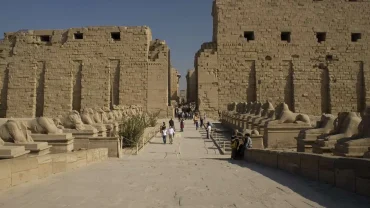
In a broader context, the disk complements other engineering marvels, such as the intricate stonework of the Karnak Temple and the architectural brilliance seen throughout Luxor and Giza. Just as the pyramids symbolize architectural mastery, the Sabu Disk could symbolize technological curiosity—an early experiment that defies modern classification.
The Legacy of the Sabu Disk in Modern Egyptology
Egyptology thrives on enigmas like the Sabu Disk. The artifact has become a focal point for discussions on lost technologies, ancient engineering, and the intellectual prowess of Egypt’s early dynasties. Museums, documentaries, and academic journals frequently feature the disk as a case study in the evolution of craftsmanship. Its enduring mystery fuels both mainstream and alternative theories, ensuring its place in scholarly debates for generations to come.
Travelers fascinated by such archaeological puzzles can explore Egypt’s rich heritage with the guidance of experts through Elevana Tours, offering curated experiences that bring ancient history to life. Whether marveling at the Valley of the Kings or delving into the secrets of the Sakkara Necropolis, visitors gain an appreciation for the depth and brilliance of Egypt’s cultural legacy—of which the Sabu Disk remains a shining example.
FAQs About the Sabu Disk
What is the Sabu Disk?
The Sabu Disk is a mysterious stone artifact discovered in the tomb of Prince Sabu at Saqqara, dating to around 3100 BCE. Its unique tri-lobed design and precise geometry have puzzled researchers for decades, leading to multiple theories about its function, from ceremonial to mechanical purposes.
Where was the Sabu Disk found?
The Sabu Disk was found in the Saqqara necropolis, within the tomb of Prince Sabu—son of Pharaoh Anedjib from Egypt’s First Dynasty. This discovery added a new layer of fascination to Saqqara’s already rich archaeological record.
What material is the Sabu Disk made from?
It is made from schist, a metamorphic stone known for its layered, brittle structure. The ability to carve such a delicate yet symmetrical object from this difficult material highlights the exceptional craftsmanship of early Egyptian artisans.
What is the purpose of the Sabu Disk?
Its true purpose remains unknown. Some scholars suggest it had ceremonial or religious significance, while others speculate it was part of a mechanical system, perhaps related to airflow or fluid dynamics. The lack of similar artifacts makes definitive conclusions difficult.
Where can I learn more about the Sabu Disk?
You can explore more about the Sabu Disk and other ancient Egyptian artifacts at museums and through guided historical experiences. Many tours, such as the Egypt Luxury Tour, include visits to sites where such discoveries were made, offering travelers a chance to witness Egypt’s ancient mysteries firsthand.

Comment (0)